


 HOIST: With forearm vertical, forefinger pointing up, move hand in small horizontal circles.

- LOWER: With arm extended downward, forefinger pointing down, move hand in small horizontal circles.

- BRIDGE TRAVEL: Arm extended forward hand open and slightly raised, make pushing motions in direction of travel.

- TROLLEY TRAVEL: Palm up, fingers closed, thumb pointing in the direction of motion jerk hand horizontally

- STOP: Arm extended, palm down hold position rigidly.
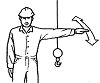
- EMERGENCY STOP: Arm extended, palm down, move hand rapid right and left. An emergency stop signal must be accepted from any person.
The emergency stop signal is a horizontal hand wave of the extended arm. It is important to immediately react because the person giving the signal may have knowledge that the crane operator does not, including: better view, knowledge of hazards, etc. Obey all STOP signals regardless of who gives them. Other than EMERGENCY STOP, signals should be accepted from only one person at a time (normally the spotter for the operator). Use standard crane signals and do not move unless directions are clear. Know standard hand signals (shown above). Hand signals are important because background noise may make communication difficult.

- MOVE SLOWLY: Use one hand to give any motion signal and place other hand motionless in front of hand engaging in motion signal.